Lewis Hine
1874 – 1940
The photographer whose camera helped end child labor in America
Lewis Wickes Hine was born on September 26, 1874, in Oshkosh, Wisconsin. After his father died in an accident while Lewis was still young, he went to work to help support his family, taking jobs in a furniture factory and other trades while saving for an education. He studied sociology at the University of Chicago, Columbia University, and New York University in the years around 1900 to 1907, training that would shape his lifelong conviction that the camera could serve social reform.
In 1901 Hine moved to New York City to teach at the Ethical Culture School, where the superintendent Frank Manny encouraged him to take up photography as a teaching tool. Around 1904 he began bringing students and his camera to Ellis Island, photographing the immigrants arriving by the thousands. Over the next several years he made hundreds of plates of newcomers waiting, carrying their belongings, and posing with their children, treating the immigrant not as a statistic but as an individual with dignity.
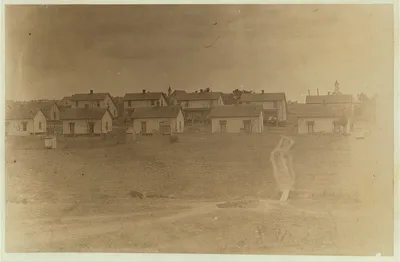
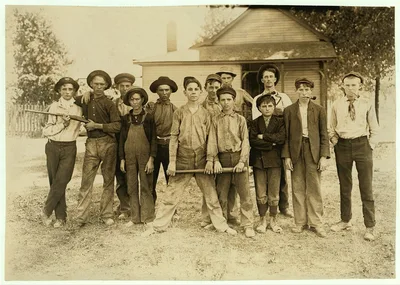
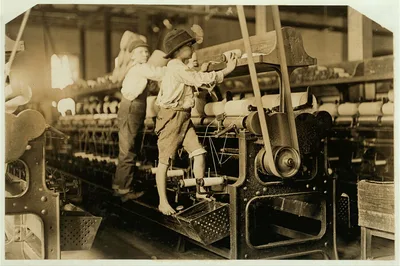
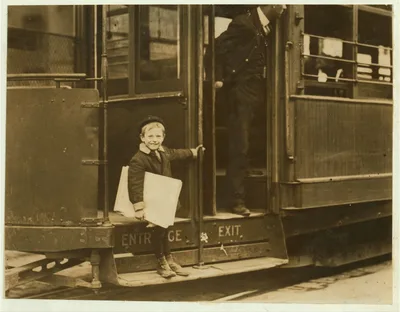
In 1907 Hine became a staff photographer for the Russell Sage Foundation and contributed images to the Pittsburgh Survey, a pioneering sociological study of industrial labor. The following year, in 1908, he left teaching to work full time as the investigative photographer for the National Child Labor Committee (NCLC). Over roughly the next sixteen years he traveled tens of thousands of miles documenting children at work in textile mills, coal mines, canneries, glass factories, fields, and city streets. To gain entry to guarded workplaces he often posed as an insurance agent, a Bible salesman, or an industrial photographer, recording children's names, ages, and heights, and measuring them against the buttons on his vest. His captioned photographs became powerful evidence in the campaign that led to the first federal child-labor laws.
During and after the First World War, Hine worked for the American Red Cross, photographing refugees and relief efforts in France and the Balkans. Returning home, he turned in the 1920s to what he called "work portraits," celebrating the skill and dignity of laborers, exemplified by his 1920 image "Power House Mechanic." His most ambitious project of these years was documenting the construction of the Empire State Building in 1930 and 1931. Hine climbed the rising steel alongside the workers he affectionately called "sky boys," swinging out over the city on cables and girders to make images such as "Icarus," published with others in his 1932 book "Men at Work," the only book of his photographs to appear in his lifetime.
In his later years Hine struggled to find work. He was chief photographer for the Works Progress Administration's National Research Project in the mid-1930s, but corporate and government patronage dried up, his style fell out of fashion, and he lost his home and applied for public assistance. Lewis Hine died on November 3, 1940, at Dobbs Ferry Hospital in Dobbs Ferry, New York, at the age of sixty-six, in obscurity and near poverty. Recognition came afterward: his vast body of work, preserved through the efforts of admirers and now held in major public collections, secured his place as a founding figure of American social documentary photography.
A Career in Images
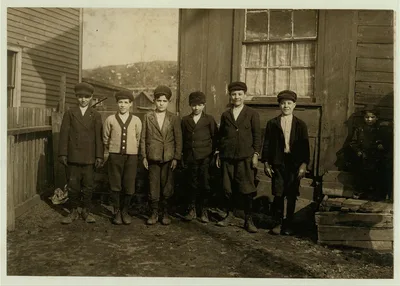
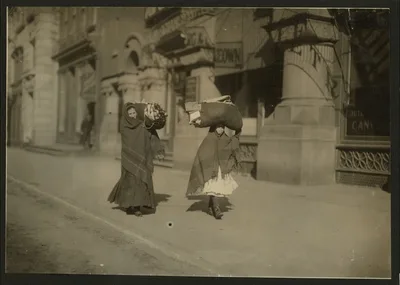
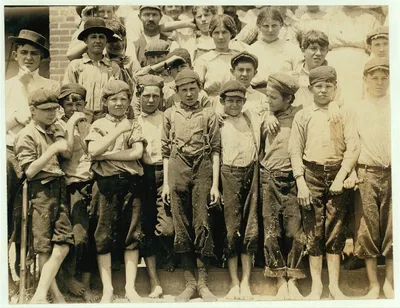
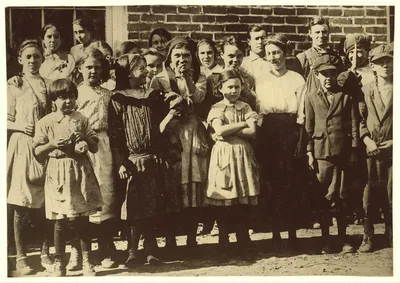
"There are two things I wanted to do. I wanted to show the things that had to be corrected. I wanted to show the things that had to be appreciated."
— Lewis Hine